
Checking for a Marion County Warrant
There is no public online portal that lists active warrants in Marion County. The Sheriff's Office runs a website and a jail roster, but neither offers a one-button warrant search. No official Most Wanted page was found in public sources either. So a real warrant check means working a short chain of offices rather than typing a name into one box.
Warrants here come from more than one court. A judge in Circuit Court, Justice Court, or Municipal Court can sign one. The Sheriff's Office and city police carry them out. Because the source can be any of these, the smart first step is to figure out which court or agency the warrant would come from. The ticket, the missed-court notice, or the charge gives the clue.
The channels that actually hold warrant information are short and worth working in order:
- Sheriff phone lines - call the administrative office or dispatch to ask whether a name has an active warrant.
- Sheriff records request - file a written public-records request for releasable warrant or incident material.
- Jail roster - a person already arrested on a warrant may show in the public custody list with charge and bond.
- Circuit Court - felony arrest warrants, capias, and indictment-related warrants tie to a Circuit Court case.
- Justice Court - bench warrants for failure to appear, traffic, and misdemeanors are held here.
- Municipal Court - city citation, ordinance, and municipal misdemeanor warrants stay with the city court.
- An attorney - counsel can confirm a warrant and arrange surrender or bond more safely than a walk-in.
Caution: Mississippi has no public statewide warrant search. Treat third-party "warrant lookup" sites as ads, not records, and confirm any result with the court or the Sheriff's Office.
Marion County Sheriff Warrant Channels
The Marion County Sheriff's Office is the agency that serves most county warrants. Its staff can often confirm by phone whether a person has an active warrant, though they may hold back detail on sealed cases, juvenile matters, or active investigations for safety reasons. The administrative office handles routine questions during business hours. Dispatch runs around the clock for urgent custody or warrant questions, and 911 is for emergencies only.
Marion County Sheriff's Office
219 Broad Street
Columbia, MS 39429
Admin 601-736-5051
Dispatch 601-736-2033 / 601-736-2711
Mon-Fri 8am-5pm
For a paper trail, the sheriff also takes public-records requests through its records page. A written request, sent by mail to the Broad Street address, is the formal route for releasable reports. Costs are charged for staff search time and copies, with printed or electronic pages billed at $0.50 each under Miss. Code Ann. § 25-61-7. Warrant material that is still active or sealed may be withheld, but past incident and arrest records are often releasable to those with a right to them. The agency's main site links these tools in one place.
Note: Reports are generally available only after about 72 hours, and the office asks requesters to follow up if there is no reply within seven business days.
Court-Level Warrant Sources in Marion County
Every warrant traces back to a court, and the court that signed it usually holds the case file. Knowing the level helps a great deal. A felony warrant lives in a different office than a traffic bench warrant. The table below maps the three trial-court levels to the warrant types they tend to issue and the office to reach for each.
| Court Level | Common Warrant Types | How to Reach |
|---|---|---|
| Circuit Court | Felony arrest warrants, capias, indictment-related warrants | Circuit Clerk, 601-736-8246 |
| Justice Court | Bench warrants, failure to appear, traffic, misdemeanors | Justice Court, 601-736-2572 |
| Municipal Court | City citations, ordinance violations, municipal misdemeanors | The issuing city court named on the citation |
Felony warrants connect to a Circuit Court criminal case, where indictments, pleas, and sentencing also live. The same file path holds the broader Marion County criminal court records once a case opens. The Circuit Clerk's office, reachable through the Circuit Clerk site, can point a caller to the case and the issuing judge.
Lower-court warrants follow the citation. A deputy or state-trooper ticket may route to Justice Court, while a city police ticket goes to that city's Municipal Court. The fastest clue is the agency name and court line printed on the ticket or notice. When in doubt, the Justice Court clerk can confirm whether a failure-to-appear bench warrant is open.
Types of Warrants in Marion County
Warrant is a broad word. Mississippi courts issue several kinds, and each starts for a different reason. Telling them apart matters, because the way to clear one depends on the type. A missed court date is not handled the same way as a felony charge or a search order.
- Arrest warrant - a court order to arrest, based on a complaint, indictment, affidavit, or probable cause.
- Bench warrant - issued by a judge after a failure to appear, contempt, or violation of a court order.
- Capias - a Mississippi order commanding arrest, often after a nonappearance or a post-charge action.
- Search warrant - authorizes a search of a place, person, or property, and is often sealed before it is carried out.
- Fugitive warrant or hold - tied to another jurisdiction's warrant and possible extradition.
- Child-support or civil contempt warrant - may arise from a chancery or child-support enforcement matter.
- Probation or parole hold - may not show as an ordinary court warrant; check the supervising agency and court.
Note: A capias and a bench warrant can look alike on a docket, so ask the clerk which term the court used and what action it now requires.
What a Marion County Warrant Record Shows
A warrant record carries a set of fields, though not all of them are public at every stage. An active, unserved warrant is usually held close. Once an arrest or a court docket makes the matter public, more fields open up. The inventory below lists the data points a warrant record can hold and how visible each tends to be.
| Field | Public Visibility | What It Shows |
|---|---|---|
| Name | Sometimes | May appear after arrest or booking, or on a court docket. |
| Warrant number | Sometimes | Visible in jail or court records when those records are public. |
| Issuing court | Often | Circuit, Justice, Municipal, or Chancery, depending on the matter. |
| Charge / reason | Often | Failure to appear, contempt, a felony or misdemeanor charge, or traffic. |
| Case number | Often | Links the warrant to the court file. |
| Bond amount / type | Sometimes | May be no-bond, cash, or surety, as set by the judge. |
| Arresting / holding agency | Often after arrest | Sheriff, city police, a state agency, or an out-of-county agency. |
| Service status | Limited | Active unserved warrants are commonly restricted. |
If a person has already been booked, much of this can surface in the public custody list. The Marion County jail roster may show the charge, the warrant number, the bond type, and the holding agency for someone arrested on a warrant. That makes the roster a useful second stop when a name has moved from "wanted" to "in custody."
How to Resolve an Outstanding Marion County Warrant
An open warrant does not go away on its own. It can lead to an arrest at a traffic stop, a job background check problem, or a license hold. Handling it on purpose, with the right office and ideally a lawyer, is far safer than waiting. The steps below outline the usual path.
- Identify the likely issuing court or agency from the ticket, the missed-court notice, the charging document, or a roster entry.
- Call the court clerk or the sheriff using official numbers. Do not rely on third-party warrant sites.
- Ask whether the warrant is active, which court issued it, whether bond is set, and whether a court date can be scheduled.
- If there is any risk of arrest, contact an attorney before appearing.
- For failure-to-appear traffic, municipal, or justice matters, ask whether payment, rescheduling, or a court appearance is required. Payment alone may not clear every warrant.
- After appearing, paying, or posting bond, ask for written confirmation that the warrant is recalled, cleared, or satisfied.
- Confirm any license or hold consequence with the state driver-services agency if the warrant tied to a traffic failure to appear or failure to pay.
Confirming Bond and Warrant Recall
Clearing a warrant has two parts. First, the underlying issue gets handled: a new court date, a plea, a payment, or a posted bond. Second, the court formally recalls the warrant. Both must happen. A person can settle the reason for a warrant and still be picked up if the recall order never reaches the system. That gap is why written confirmation matters so much.
Bond on a warrant can take several forms. A judge may set a cash bond, a surety bond through a bondsman, a property bond, release on recognizance, or no bond at all for serious charges. The amount and type appear on the warrant or the case file. Once bond is posted or the court releases the hold, the next step is to get proof in writing.
Important: Always get written confirmation that a warrant is recalled or satisfied, and keep it. A cleared case with a live warrant record can still trigger an arrest.
The District Attorney Behind Marion County Warrants
Police and deputies make arrests, but felony prosecution runs through the District Attorney. Marion County sits in the 15th Circuit Court District, served by the 15th Circuit District Attorney's Office at 500 Courthouse Square, Suite 3, in Columbia. The office can be reached at 601-731-1476 and online at the 15th Circuit District Attorney site. The DA prosecutes felonies such as murder, robbery, drug crimes, and burglary, advises law enforcement, and presents cases to the grand jury, which is where many felony warrants and indictment-related capias orders begin.
The office has drawn news coverage as its leadership changes. WDAM reported that longtime District Attorney Hal Kittrell will not seek reelection in 2027 after more than two decades in the role.
The same coverage matters for warrants because the DA decides which charges proceed, which means the office shapes the felony cases that warrants feed. Several candidates have already stepped forward to lead it next.
Forrest County prosecutor Clay Cranford announced a run for the 15th Circuit District Attorney post, joining the field early in the race.
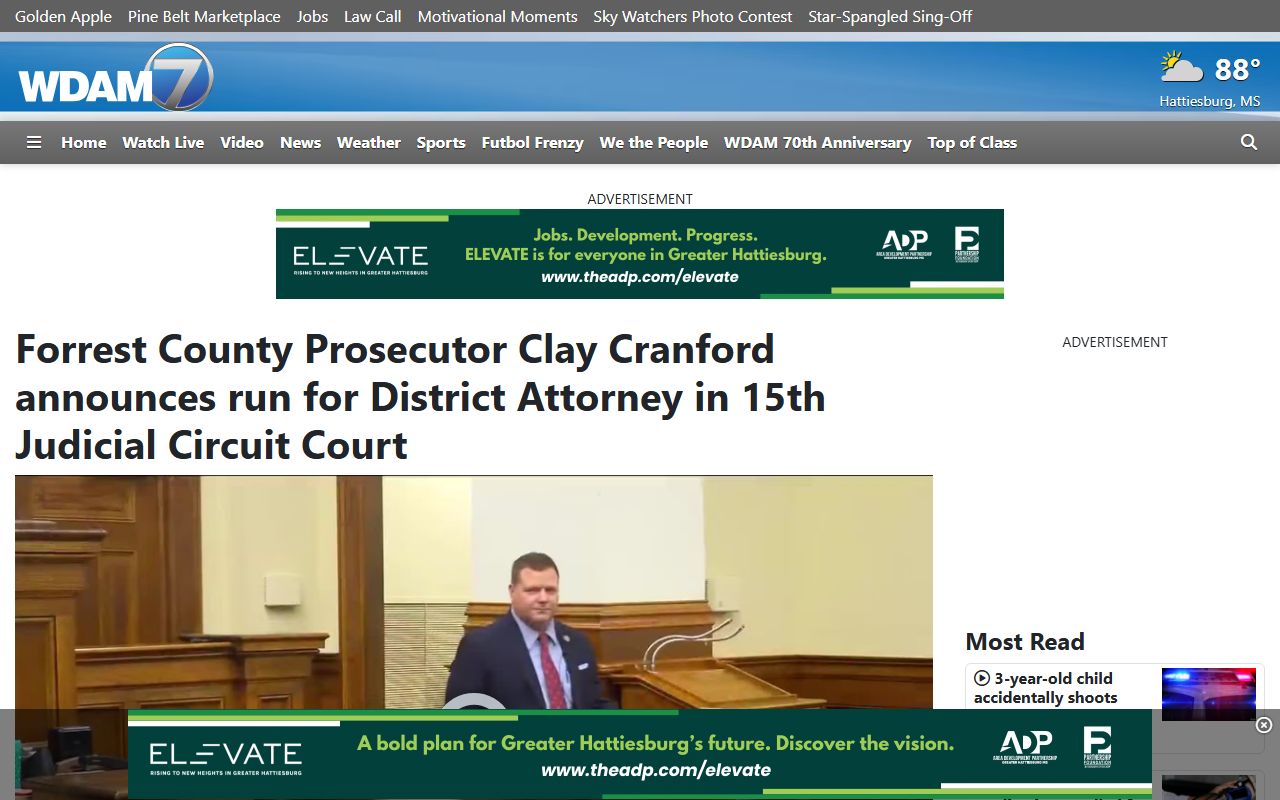
Whoever wins will inherit the charging authority that turns arrests into formal prosecutions across Marion and the neighboring counties in the district.
State Rep. Jansen Owen has also entered the District Attorney race for the 15th Circuit Court District.
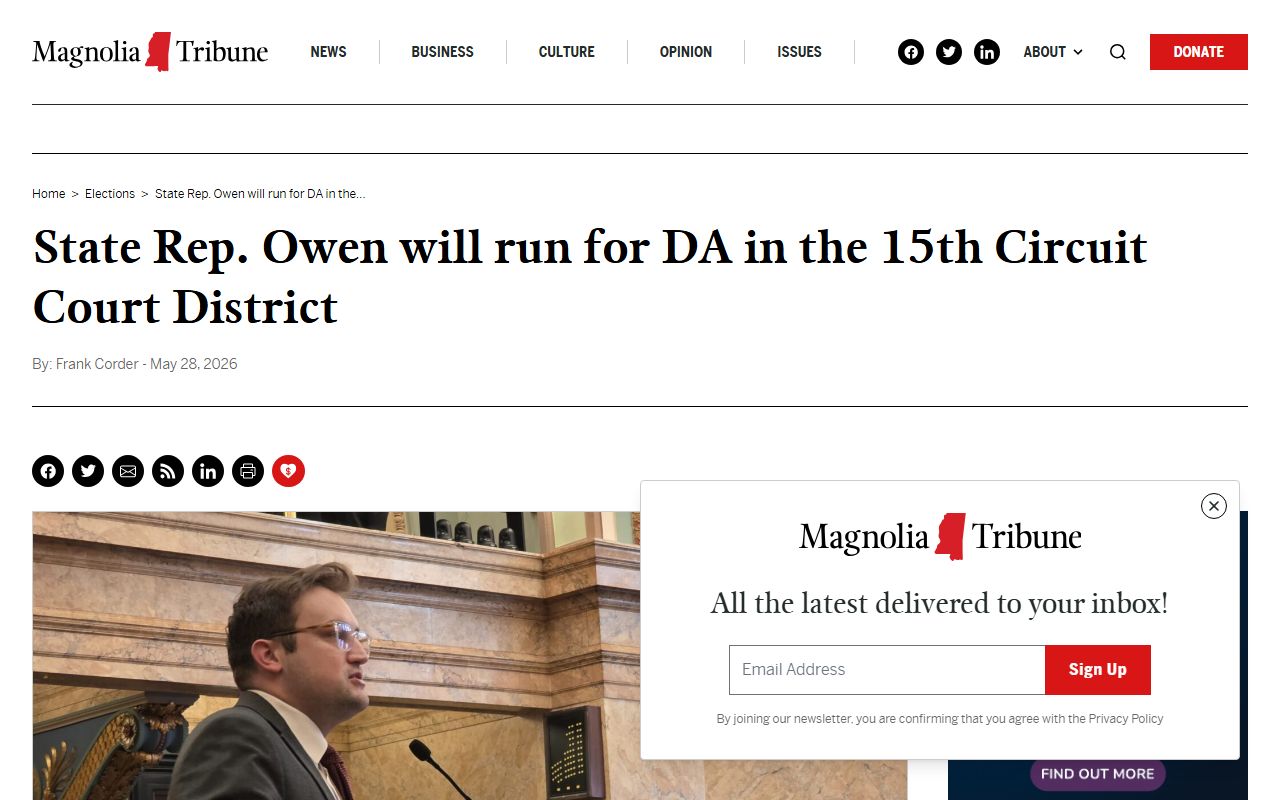
For a person with a felony warrant, the practical takeaway is that the DA, not the arresting officer, controls the charge. That is one more reason to have counsel speak with the office before any surrender.
Intervention Court Alternatives to a Marion County Warrant
Not every case ends in a cell. The 15th Circuit Intervention Court gives some drug-using offenders supervised treatment instead of straight incarceration. It runs in four phases over three to five years and serves the same district that includes Marion County. The state judiciary treats it as a special court for offenders who qualify, and the program leans on caseworkers, drug testing, and community support.
WDAM covered a milestone when 48 people graduated from the 15th Circuit drug intervention program in June 2026.
The reported outcomes included drug-free births, children reunited with parents, and graduates earning GEDs or college certificates. Eligibility is never automatic. It turns on the charge, the criminal history, treatment needs, and approval from both the prosecutor and the judge. A defendant or family member should ask the Circuit Clerk, the District Attorney, appointed counsel, or the assigned judge whether a treatment track fits the case before assuming a warrant must end in jail time.
Sealed and Juvenile Warrants in Marion County
Some warrants never appear in any public channel by design. Search warrants are commonly sealed before and sometimes after they are carried out, so the public usually cannot view them in advance. Active, unserved arrest warrants are also held back to keep a person from fleeing. A blank result from the sheriff or a clerk does not always mean no warrant exists.
Juvenile matters carry the strongest shield. Youth-court records in Mississippi are confidential under Miss. Code Ann. § 43-21-261, and a warrant or order tied to a youth-court case is not treated like an adult public record. Access is generally limited to parties, attorneys, agencies, and people the court authorizes. Federal and fugitive holds add another layer, since those trace to other jurisdictions and agencies outside the county system.
Note: When a warrant cannot be confirmed through county channels, an attorney can often check sealed or restricted matters that the public cannot reach.