
Criminal Court Records in Marion County
A criminal court record is the case file a court keeps once a prosecutor brings formal charges. In Marion County, that file lives with the clerk of the court that handles the matter. Felony cases run through the Circuit Court, so the Circuit Clerk holds the felony case file. The clerk logs every filing in date order. Each hearing, motion, and order becomes part of the permanent record. The file is not the arrest report, and it is not the jail roster. It is the court's own record of the prosecution.
Two court levels produce most criminal records in the county. The Circuit Court hears felony cases, indictments, jury trials, pleas, and sentencing. Justice Court and Municipal Court handle misdemeanors, traffic crimes, and the first steps of a felony before it moves up. A city police charge often routes to Municipal Court. A sheriff or state trooper misdemeanor may land in Justice Court. The court that opened the file is the one that keeps it. For a closer look at the charges on their own, the Marion County arrest records and court charges page tracks how a charge is filed and how it can change.
From Initial Appearance to Indictment in Marion County
Mississippi routes every felony through a set order before it reaches a Circuit Court trial. The path starts low and moves up. All felony arrests first get an initial appearance in Justice Court. A judge confirms the charge, sets bond, and protects the right to a prompt hearing. Justice Court judges in the county hold jail court three times each week so this appearance happens within three days of arrest. The case becomes a Circuit Court matter only after a grand jury returns an indictment.
- Initial appearance. Justice Court reviews the charge and sets bond soon after arrest.
- Grand jury review. A grand jury weighs the evidence the prosecutor presents.
- Indictment. A felony indictment moves the case up to the Circuit Court.
- Circuit Court file. The Circuit Clerk opens the case file that holds the rest of the record.
Because of this split, an arrest does not always have a Circuit Court file yet. Early charges may show only in a jail roster or a Justice Court entry. The felony case record fills in after the indictment and arraignment.
How to Search Marion County Criminal Court Records
Marion County has no single all-courts case portal. The search runs as a channel map keyed to the court and the record type. Felony case files start with the Circuit Clerk. Statewide electronic filing runs through Mississippi Electronic Courts, where both the county circuit and chancery courts now file. Public remote access can be limited, so a courthouse terminal or a clerk request often gets the full file.
- Match the case to the court. Felony files sit with the Circuit Clerk; misdemeanors sit with Justice or Municipal Court.
- Check the online channel. Look at Mississippi Electronic Courts for participating Marion County courts.
- Search by defendant name or case number. Add a filing date range to narrow a common name.
- Open the docket. Read the charges, the plea, the hearing dates, and the disposition entry.
- Request a certified copy from the Circuit Clerk when a plain printout will not do.
For the wider set of civil, family, and land files, the Marion County court records page maps every clerk and portal. Many older criminal files are stored in books or archives and need a clerk to pull them by hand.
Stages of a Marion County Criminal Case
A criminal case moves through fixed steps, and each step leaves a mark in the file. The docket lists them in date order. Reading the entries from top to bottom shows how the case advanced and where it stands now.
Case flow: Charges Filed › Arraignment › Pretrial / Motions › Plea or Trial › Disposition › Sentencing
| Stage | What Happens |
|---|---|
| Arraignment | The court reads the charges and the defendant enters a plea, such as guilty, not guilty, or no contest. |
| Pretrial / Motions | Both sides share evidence, file motions, and may discuss a plea agreement. |
| Plea or Trial | The case ends in a negotiated plea or proceeds to a judge or jury trial. |
| Sentencing | After a guilty plea or verdict, the judge orders the penalty and the clerk logs it. |
Note: A case can stall at any stage through a continuance, so an open file does not always mean a trial is near.
What a Marion County Criminal Court Record Shows
A criminal court file is built from many fields. Some name the people involved. Others track dates, money, and outcomes. The fields below appear on most Marion County criminal records, though some entries stay hidden until a clerk pulls the full file.
| Field | What It Shows |
|---|---|
| Case Number | The unique docket number the court assigns to the file. |
| Defendant | The person the state has charged, listed as State versus the named party. |
| Charges | The counts as filed or indicted, with statute references and severity. |
| Docket Entries | The dated list of filings, hearings, motions, and orders. |
| Plea | The defendant's answer to each charge. |
| Disposition | The current or final result of each count. |
| Sentence | The penalty ordered after a conviction or guilty plea. |
The file may also show the assigned judge, the attorneys, bond terms, fines, court costs, and restitution. Protected items get redacted. Social Security numbers, bank account numbers, and minor-identifying details are removed from public versions.
Charges vs Convictions
Being charged is not the same as being convicted. A charge is an accusation. A conviction is a finding or a plea that settles guilt. A criminal court record can show charges that were dropped, dismissed, or that ended in acquittal. Reading only the charge and stopping there gives a false picture of the outcome.
| Charge | Conviction | |
|---|---|---|
| Stage | Accusation | Verdict or plea |
| Burden of Proof | Probable cause | Beyond a reasonable doubt |
| Can Change | Amended, reduced, or dropped | Stands unless appealed or vacated |
| Public Record | Yes | Yes |
The disposition line settles the question. It records whether each count led to a conviction, a dismissal, or some other end.
Reading Dispositions and Sentences
The disposition is the heart of a criminal court record. It states how the court resolved each count. A single case can carry several dispositions when it holds more than one charge. Sentencing terms then sit beside the disposition for any count that ended in a conviction.
- Guilty
- A plea or verdict that establishes guilt on the count.
- Not guilty
- A verdict that the state did not prove the charge.
- Dismissed
- The count was dropped, with or without the right to refile.
- Nolo contendere
- A no-contest plea that resolves the count without admitting guilt.
- Nonadjudication
- Under Miss. Code Ann. § 99-15-26, the court withholds a conviction while the defendant completes set conditions.
A sentence can include prison or jail time, probation, fines, court costs, and restitution to a victim. The record shows the length, any suspended portion, and the terms of supervision. A nonadjudicated matter that the defendant completes can later affect record status and expungement eligibility.
The District Attorney and Marion County Prosecutions
Police make arrests, but a prosecutor decides the formal charges in a felony case. Marion County sits in the Fifteenth Circuit Court District, led by District Attorney Hal Kittrell. That office prosecutes felonies such as murder, robbery, drug crimes, and burglary across five counties: Jefferson Davis, Lamar, Lawrence, Marion, and Pearl River. The district attorney can amend a charge, reduce it, dismiss it, or present it to a grand jury. A first-time nonviolent offender may qualify for the office's pretrial diversion program as an alternative to prosecution.
500 Courthouse Square, Suite 3
Columbia, MS 39429
601-731-1476
Monday to Friday, 8am to 5pm
A separate office handles lower-level state work. County Prosecuting Attorney Lawrence Hahn represents the state in justice and county court matters, takes criminal appeals from Justice Court up to Circuit Court, can present matters to the grand jury, and handles misdemeanor youth-court proceedings. The Fifteenth Circuit District Attorney's Office also runs victim assistance and an economic crime unit for bad-check cases.
Public Access to Marion County Criminal Records
Most adult criminal case files are open to the public in Mississippi. The Public Records Act treats government records as open for inspection and copying unless another law makes them exempt. Court files follow that rule along with the state court rules on filing and access. A requester should bring the names, the case number if known, and the approximate filing date, then ask for the copy type needed.
Key Statutes:
Miss. Code Ann. § 25-61-5 - public bodies must let people inspect and copy public records under reasonable written procedures.
Miss. Code Ann. § 25-61-7 - agencies may charge reasonable fees for search, review, redaction, and copies.
Note: Open access does not override sealed files, youth-court limits, or expungement orders, which keep some criminal records out of public view.
Sealed vs Expunged Criminal Records
Sealing and expungement are not the same thing, and people often mix them up. A sealed record still exists but is hidden from general public access. An expunged record is treated as if it never happened. Mississippi expungement is a court process, not a clerk-counter deletion request.
| Sealed | Expunged | |
|---|---|---|
| Visibility | Hidden from the public | Treated as never existed |
| Law Enforcement | Limited access | Very limited access |
| How It Happens | By statute or court order | By petition to the court that handled the case |
| Eligibility | Set by the order or law for the file | Per Miss. Code Ann. § 99-19-71; violent and sex offenses are excluded |
A petitioner files in the court that handled the criminal matter and may have to serve the prosecutor. Eligibility turns on the charge, the disposition, the time elapsed, and any prior record. Some dismissals, acquittals, nonadjudications, and first-offense matters can qualify, while excluded crimes cannot. A granted order tells agencies and clerks how to restrict access. Private background-check copies can lag behind an official order, so a certified copy of the order is worth keeping.
Restricted Criminal Court Records in Marion County
Not every criminal matter is open. Several categories stay confidential by law, even when an adult felony file beside them is public. The clerk follows the statute and the judge's orders on what may be released.
- Youth-court and juvenile records, confidential under Miss. Code Ann. § 43-21-261.
- Sealed and expunged cases, which the public should not be able to view.
- Records redacted to remove Social Security numbers, account numbers, and minor details.
- Sealed search warrants and parts of ongoing investigations.
Access to a restricted file is usually limited to the parties, their attorneys, certain agencies, or someone with a court order. A person who believes a record was wrongly withheld can ask the clerk how the access rule applies and what the next step is. The clerk cannot give legal advice but can explain the local procedure.
Federal Criminal Cases for Marion County
Some cases never reach the county courthouse. A federal crime charged in this area runs through the U.S. District Court for the Southern District of Mississippi, not the Circuit Clerk. Federal prosecutors, not the local district attorney, handle those matters. The federal prosecutor announces many of them online.
The U.S. Attorney's Office for the Southern District of Mississippi posts news on the federal cases it brings in this region.
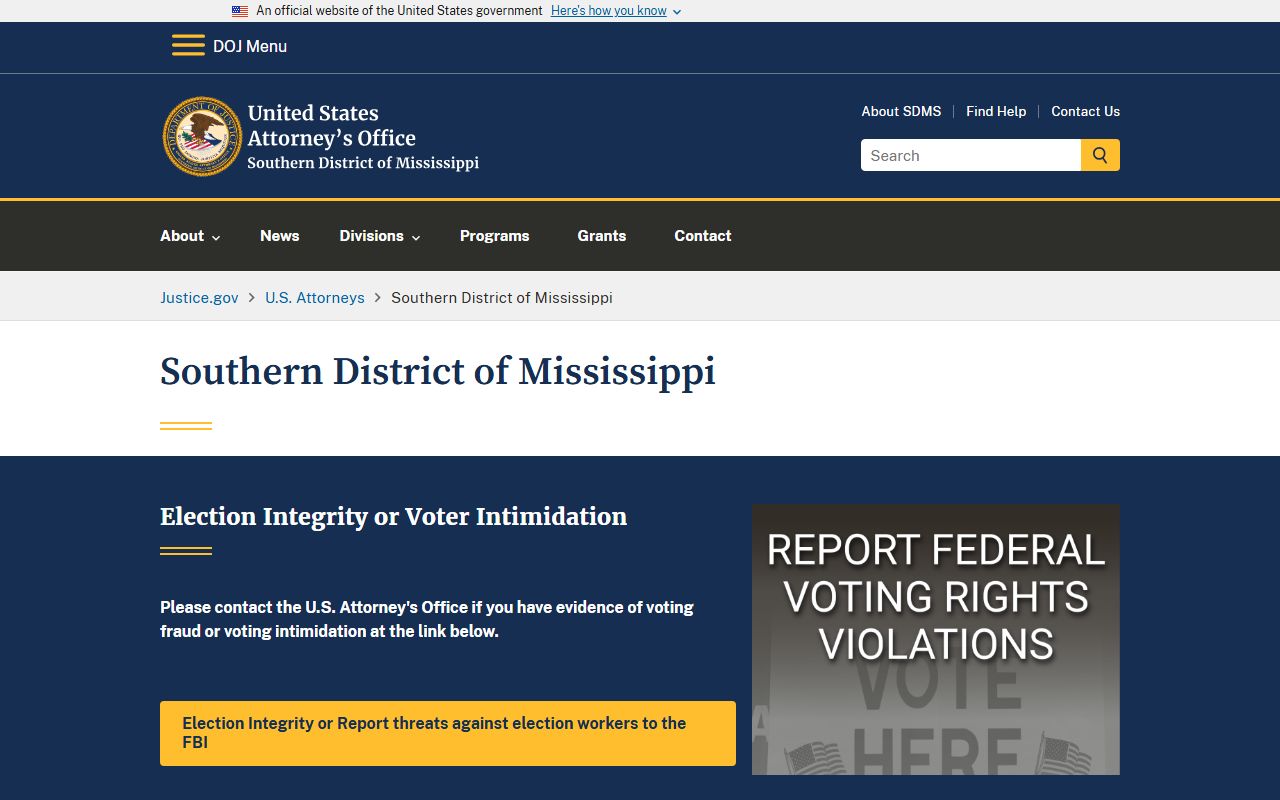
Those federal files are reached through PACER, the federal case system, rather than any Marion County clerk. A federal record covers the charge, plea, and sentence much like a state file, but the custodian is different.
Free tools can help with research even when they are not the source of record. CourtListener offers free access to many court opinions and some dockets.
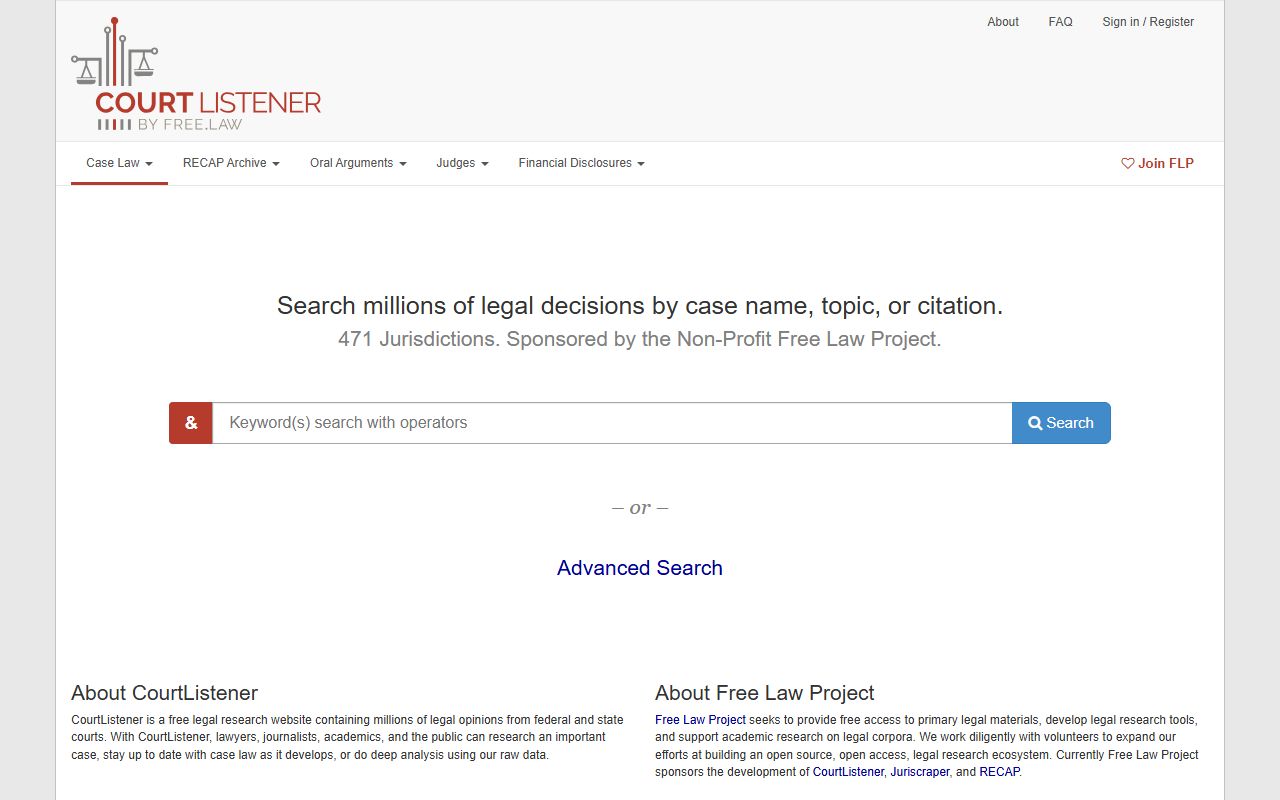
It is a research tool, not the official custodian, so a certified copy still comes from the clerk that holds the case. Use it to read decisions and follow a matter, then confirm any detail against the official file.