
Chancery Court Is the Marion County Probate Court
Mississippi splits its trial courts, and probate sits with the Chancery Court. There is no separate probate court or surrogate's court in the state. Marion County estates, wills, guardianships, and conservatorships all move through the Chancery Court for the county. The Chancery Clerk files the petitions, keeps the minutes, and serves as the court's records custodian. The current Chancery Clerk is Elisha Moree.
The reach of the court is broad. Chancery handles the affairs of people who have died and the protection of people who cannot manage their own affairs. The same office also records the land documents that estate property often involves.
- Wills and petitions to admit a will to probate.
- Estates of people who have died, with or without a will.
- Letters testamentary and letters of administration.
- Guardianship of minors or incapacitated adults.
- Conservatorships and financial management for protected persons.
- Minor settlements, including insurance money owed to a child.
- Inventories, accountings, creditor notices, heirship, and final distribution.
Because the court keeps both estate files and land records, one office can confirm an estate and trace title to property the estate must transfer. That dual role makes the Chancery Clerk the first stop for most probate questions in the county.
Marion County Chancery Clerk
250 Broad Street, Suite 2
Columbia, MS 39429
601-736-2691
Fax 601-444-0206
Monday to Friday, 8am-5pm
Marion County Probate Terms Defined
Probate files use words that rarely come up in daily life. A short glossary helps a reader make sense of a petition, an order, or a set of letters. These terms appear again and again across Marion County estate and guardianship cases.
- Testator
- The person who made the will. A testator names who should receive property and who should carry out the plan.
- Executor
- The person named in the will to settle the estate. The court confirms the executor and issues letters testamentary.
- Intestate
- Dying without a valid will. Mississippi intestacy law then decides who inherits and in what share.
- Administrator
- The person the court appoints to settle an estate when there is no will or no named executor able to serve.
- Guardianship
- A court arrangement that gives one person authority to care for a minor or for an adult who cannot manage daily affairs.
- Conservatorship
- A court arrangement focused on managing the money and property of a protected person.
Mississippi modernized guardianship and conservatorship under the Guardianship and Conservatorship Act, often called the GAP Act. The 10th Chancery District adopted it on July 1, 2019, and the state followed on January 1, 2020.
How to Search Marion County Probate Records
Marion County does not offer a single all-in-one probate docket search. The county runs a Chancery records portal, but it is built mainly around official land records and a fraud alert sign-up. A reader should not assume the portal returns full estate or guardianship dockets. The surest path mixes online checks with direct contact at the Chancery Clerk counter.
- Gather the basics first. Have the decedent or ward's full name, an approximate death or filing date, the case number if known, and the copy type you need.
- Try the online channel. The Chancery records portal at records.marioncountyms.gov is strongest for land documents tied to an estate, so check it for deeds, deeds of trust, and recorded orders.
- Check the statewide system. Mississippi Electronic Courts may carry Marion County chancery filings, though public access can require an account, a fee, or a courthouse terminal.
- Call or visit the Chancery Clerk. The counter at 250 Broad Street, Suite 2 can confirm whether a probate file exists and how to obtain copies.
- File a public-records request if the file is not online. Submit the name, date, case number, and exact document under the Mississippi Public Records Act.
Older or sealed files may sit offsite or need clerk retrieval. Ask whether the record is stored onsite, archived, or restricted before making the trip.
Note: The county records portal centers on land records and fraud alerts, so confirm with the Chancery Clerk before assuming a full probate docket is searchable online.
Estates and Wills in Marion County Chancery Court
Probate opens when someone files the required petition in Chancery Court. If a will exists, the petitioner asks the court to admit it and to appoint the named executor. If there is no will, the petitioner seeks administration and the appointment of an administrator. Either way, the court can issue letters that give the representative authority to act.
Those letters carry real power. With them, an executor or administrator can collect assets, notify creditors, pay valid debts, manage estate property, and distribute what remains. Distribution follows the will, or follows Mississippi intestacy law when no will controls. The clerk records each step so heirs, banks, and title companies can rely on the file.
A probate case can stay open for months or longer. Notice to creditors must run, claims must be reviewed, and a final accounting often needs court approval before the estate closes. Heirs who want to track progress can ask the clerk for the docket or pull recorded orders from the land-records side when real property is involved.
Marion County Guardianships and Conservatorships
Guardianship and conservatorship cases are chancery records too. A guardianship covers the care of a minor or an adult who cannot manage daily affairs. A conservatorship focuses on managing that person's money and property. Both run under the GAP Act, and both demand careful, sworn filings from the people who serve.
The 10th Chancery District publishes the forms these cases need. Its forms page hosts estate checklists, GAP Act inventory and accounting forms, adult guardianship and conservatorship petitions, medical affidavits, minor guardianship petitions, parental waivers, and oaths and letters of guardianship. Anyone starting a case can review the official packet at the 10th Chancery District forms page.
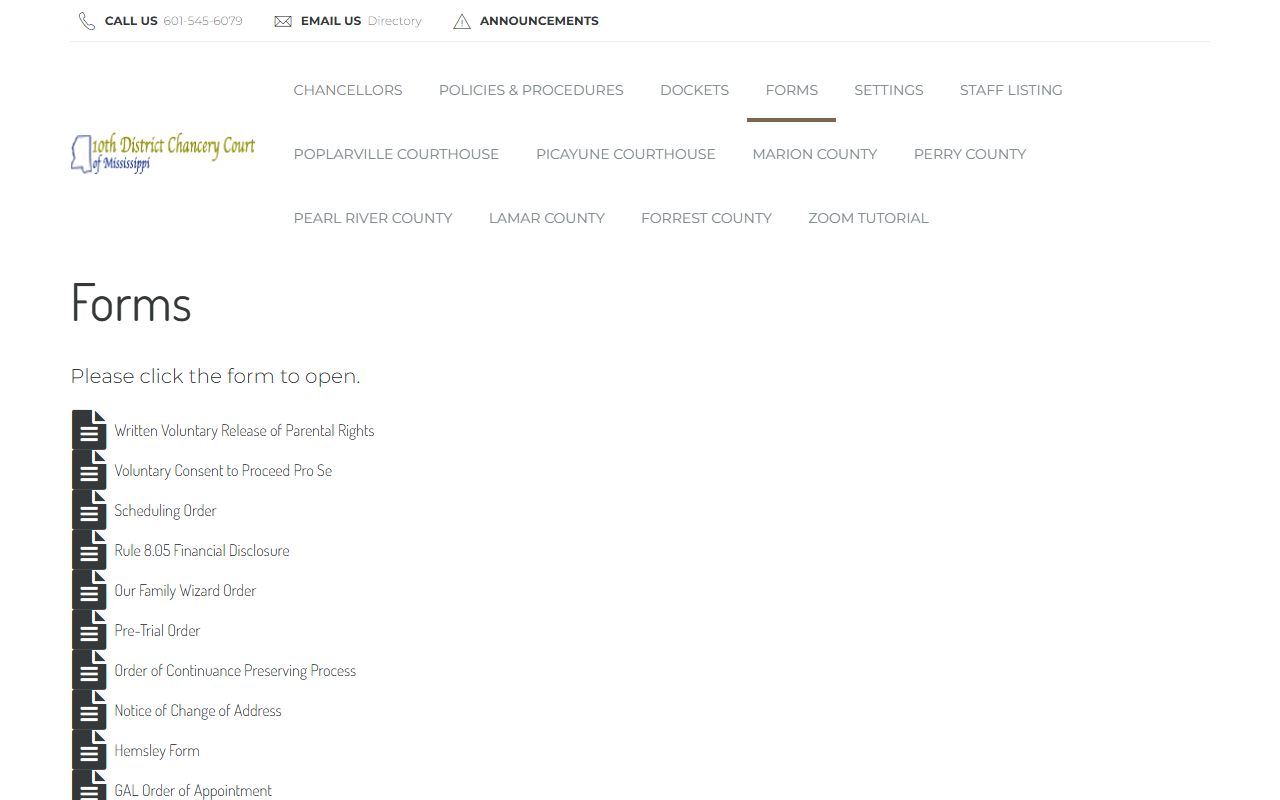
Having the right form in hand keeps a filing from bouncing back. Local rules also group related cases. Guardianships and minor settlements involving siblings from the same cause are assigned to the chancellor who received the first case, and a minor settlement arising from an estate goes to the chancellor handling that estate. Video conferencing can be allowed for minor settlements and other ex parte matters with prior court approval.
Probate Setting Categories in Chancery Court
The 10th Chancery District uses web setting categories to schedule chancery matters. Each type signals what the court will hear. Requesting a date does not place a case on the docket until a court administrator confirms the date and time.
| Setting Type | Use |
|---|---|
| Probate Settings | General probate and estate matters before the chancellor. |
| Determination of Heirs | Estate and heirship proceedings to confirm who inherits. |
| Ex Parte | Some uncontested probate matters handled without an opposing party. |
| Trial Settings | Contested probate or will matters that need a hearing. |
| Status Conference | Case management and status checks on a pending file. |
A filer who picks the wrong category can lose a setting. When in doubt, the court administrator can point a party to the right one before the request is submitted.
What a Marion County Probate File Contains
A probate file grows as the case moves. It starts with a petition and can end with a closing order, with many documents in between. Knowing the parts helps a searcher ask the clerk for the exact page needed rather than the whole file.
- The petition to probate the will or to open administration.
- The will itself, plus the oath and any bond or waiver.
- The order admitting the will and the letters issued to the representative.
- The inventory of estate assets and later accountings.
- Publication and notice to creditors, with any claims filed.
- Petitions to sell or transfer property, and the orders that follow.
- The final accounting and the order closing the estate.
Guardianship and conservatorship files follow a similar arc, swapping in inventories of a ward's assets, well-being reports, and accountings of money spent. Some of those pages hold sensitive detail and may be redacted in any public copy.
Certified Probate Copies and Marion County Fees
Certified copies often matter more than plain prints in probate. Banks, title companies, heirs, and out-of-county property offices usually want a certified copy of letters or an order before they act. A certified copy carries the clerk's seal and legal weight that a screen print does not.
Marion County chancery probate and copy fees were not published in the official sources reviewed for this page. Rather than guess at a number, a requester should confirm the current charge directly with the Chancery Clerk. The fee schedule the Chancery Clerk applies can change, and the office can quote the exact cost for the copy type needed.
| Probate Item | Fee |
|---|---|
| Estate filing | Not published; confirm with Chancery Clerk |
| Guardianship or conservatorship filing | Not published; confirm with Chancery Clerk |
| Certified copy | Not published; confirm with Chancery Clerk |
| Plain copy | Not published; confirm with Chancery Clerk |
| Recording a probate-related land document | Not published; confirm with Chancery Clerk |
Costs may apply for search time, redaction, copies, and certification, as Mississippi law allows offices to charge a reasonable fee. Ask whether payment is due in advance and which methods the counter accepts.
Common Marion County Probate Delays
Probate rarely closes overnight. Several common snags can stretch a case out, and most show up in the file as extra petitions, notices, or hearings. A searcher who sees a long docket can often spot the cause in these patterns.
- A missing original will, or a will that cannot be proven.
- Disagreement among heirs over assets or shares.
- Real estate that must be sold or transferred.
- Creditor claims that the estate must review and resolve.
- Minor or incapacitated beneficiaries who need extra protection.
- Out-of-state property or heirs that complicate notice.
- A contested will, an undue-influence claim, or a capacity challenge.
Court approval of a settlement or final accounting can add time as well. None of these by itself means trouble. They simply explain why an estate file may stay open while the chancellor works through each step.
Restricted Probate and Family Court Records
Not every chancery file is open to the public. Guardianship and conservatorship records can hold medical, financial, and minor-identifying detail, so access may be limited or redacted even when a docket entry shows. Adoption cases in Chancery Court are sensitive and are typically closed to general inspection. Mental-health commitment files carry medical information and stay restricted or redacted as well.
Youth-court matters are separate and confidential under Miss. Code Ann. § 43-21-261. They are not ordinary public records and usually reach only parties, attorneys, agencies, or court-authorized persons. The chancery system also touches family welfare through programs nearby. Marion County Youth Court launched a family navigator program, reported by WDAM in early 2026, to link families with community help in cases that are not severe abuse or neglect.
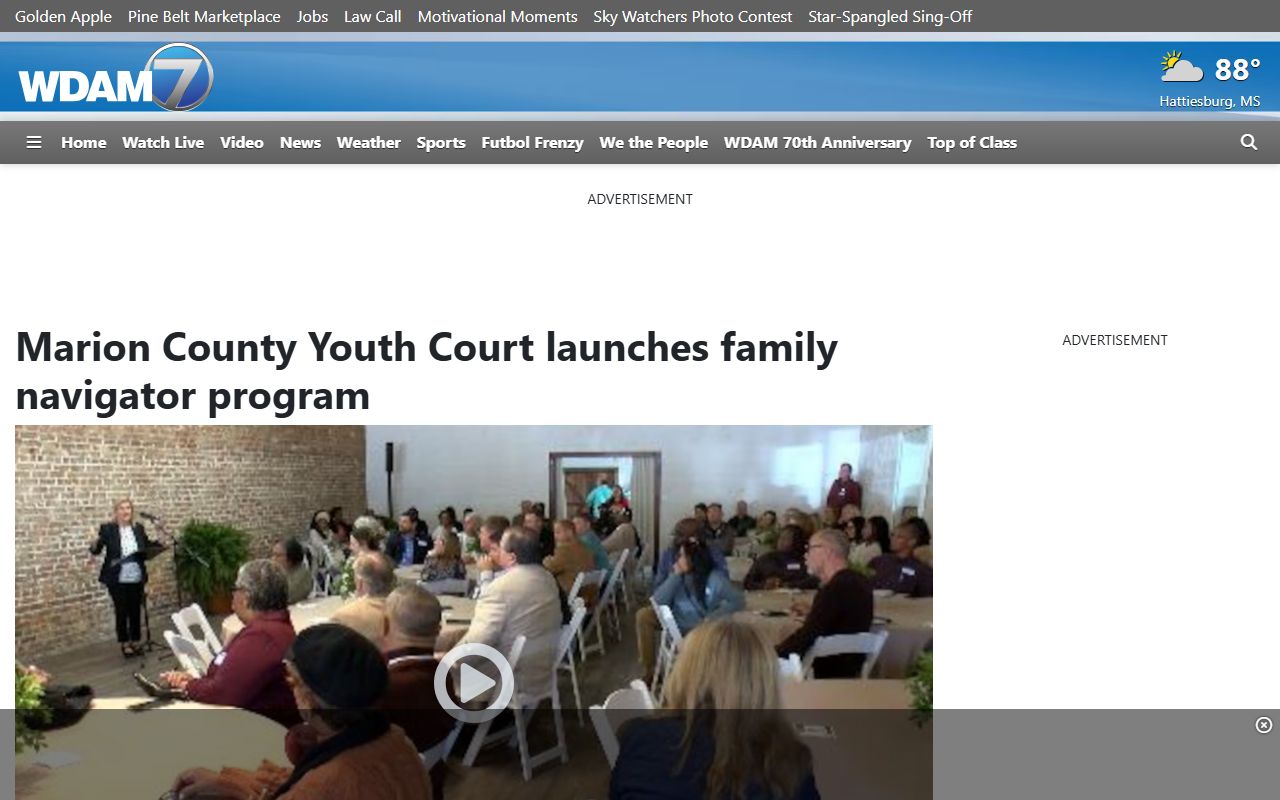
That program is a service, not a public record lookup, so it does not produce files a searcher can pull. When a probate or guardianship request involves a minor, expect redaction of Social Security numbers, account numbers, protected addresses, and any detail that would identify a child. Marriage license and divorce questions sit in a related lane, with marriage records held by the Circuit Clerk and divorce decrees filed in Chancery Court, as the Marion County marriage and divorce records page explains.
Federal Estate Matters Beyond Marion County
Some estate-related disputes leave the county courthouse. Marion County sits in the federal Southern District of Mississippi, and neither the Chancery Clerk nor the Circuit Clerk keeps federal files. A bankruptcy that overlaps with an estate, for example, is a federal matter. The U.S. Bankruptcy Court for the Southern District of Mississippi publishes its case information separately.
Bankruptcy records can affect what an estate collects or owes when a debtor or creditor files. The bankruptcy court at mssb.uscourts.gov handles Chapter 7, 11, 12, and 13 petitions, schedules, trustee notices, and discharge orders.
Federal access runs through the court's electronic system and PACER credentials, which differ from the county channels above. If a chancery ruling is appealed up the federal ladder, review lands at the U.S. Court of Appeals for the Fifth Circuit, which covers Mississippi, Louisiana, and Texas.
The Fifth Circuit hears federal appeals only, so most Marion County probate work never reaches it. For a routine estate, will, guardianship, or conservatorship, the Chancery Clerk in Columbia remains the office that holds the record.